


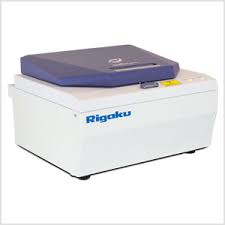
X-ray fluorescence spectroscopy is one of the key elemental analysis methods widely used across industry and research laboratories. XRF easily handles elemental identification in a broad range of mineral samples such as geological materials, ores, rocks, glass, cement, ceramics, metal alloys, and more. In this technique, X-rays interact with the surface layers of a sample, exciting its atoms. As electrons shift between atomic shells, they emit characteristic X-ray lines. The wavelength of each emitted line reveals the type of element present, and the intensity of the radiation reflects its abundance.
XRF systems generally fall into two categories: WDS (wavelength-dispersive) and EDS (energy-dispersive). When the sample is irradiated, the excited atoms emit secondary X-rays. By measuring either the wavelength (WDS) or the energy (EDS) of these signals, the instrument identifies the elements contained in the sample.
