


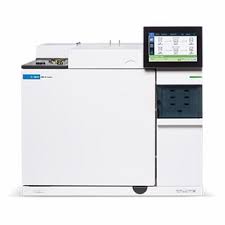
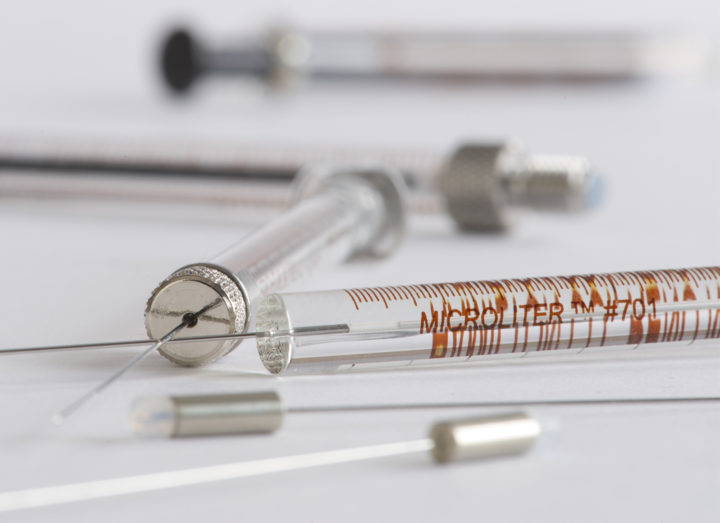
Gas chromatography is a separation technique for the analysis of volatile compounds without their breakdown. The system works on two phases, a stationary phase and a mobile phase. The mobile phase is an inert gas (commonly hydrogen, helium, nitrogen, argon, or carbon dioxide), sometimes called the carrier gas. The stationary phase is either an adsorbent […]
Author Archives: admin
14
Mar
Mar
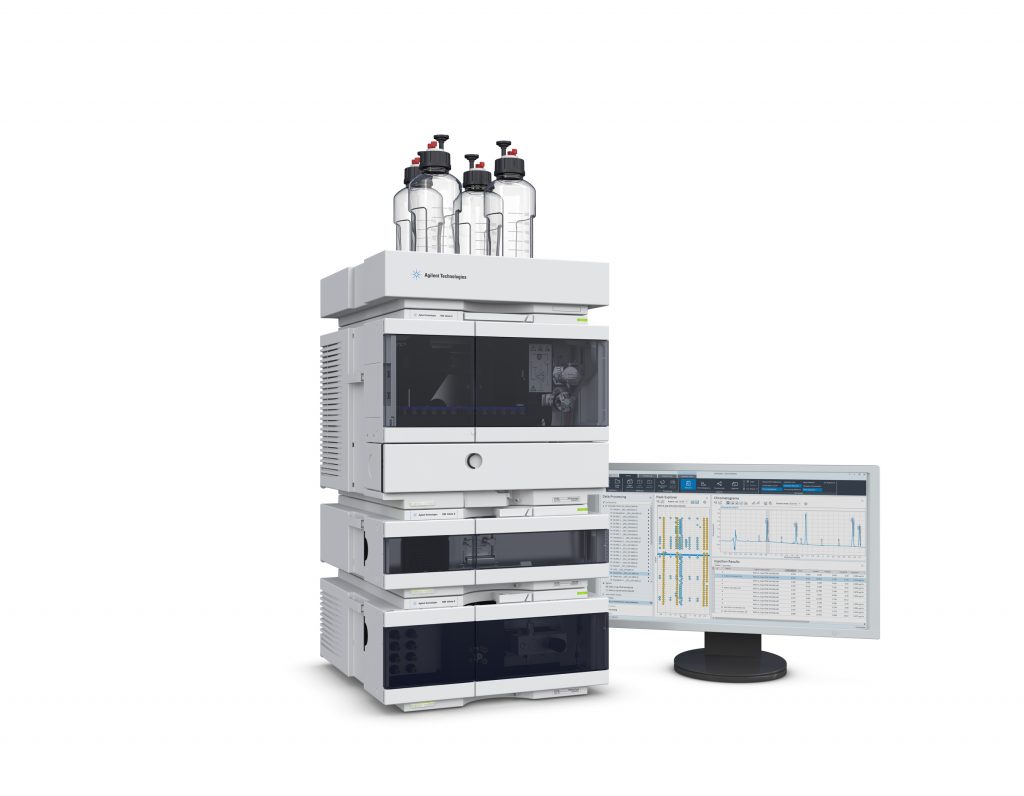
High-performance liquid chromatography (HPLC) is one of the most important analytical techniques in chemistry, which is used for the separation, identification, and quantification of small amounts of chemical species. Like other chromatographic systems, in high-pressure liquid chromatography, the mobile phase is liquid, and the stationary phase is solid or liquid. It has increased at an […]
14
Mar
Mar
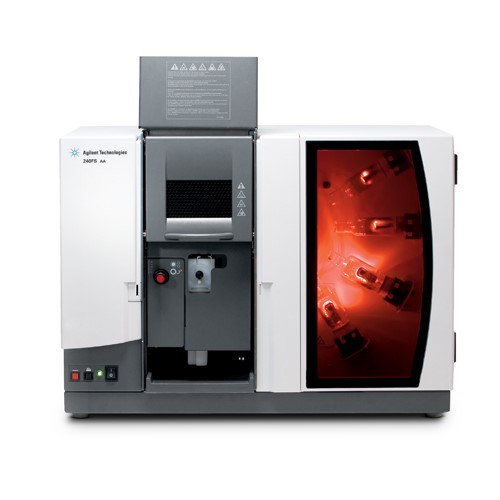
Atomic absorption spectroscopy is an analytical method for measuring the amount of chemical elements in the form of free atoms in the gas phase as a function of the amount by which they absorb light. Its basic principle is simple: free metal ions absorb light of certain wavelengths. In analytical chemistry, AAS has many applications […]
10
Mar
Mar
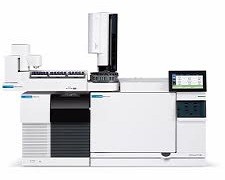
GC-MS is a combination of gas chromatography and mass spectrometry in which the separation ability of gas chromatography is used along with the identification power of mass spectrometry. It is one of the most popular analytical methods for samples consisting of volatile or semi-volatile compounds (liquid, gaseous, or solid). GC-MS systems are useful for determining […]
07
Mar
Mar
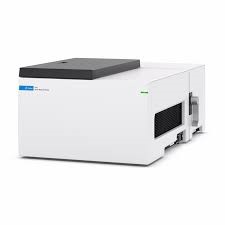
A UV/Vis spectrophotometer is an analytical laboratory instrument that is used to study the interaction of light with matter in order to identify and measure chemical compounds. Its major function is to measure the light absorption by molecules so that it can precisely determine their concentration and structure. These systems have single-beam as well as […]